
AI Isn’t Going Anywhere. Neither Are We.
It seems like everyone is talking about AI these days. Are you tired of talking about AI? Reading about AI? Thinking about AI? Me too.
But AI isn’t going away and it does deserve our attention. I’ve developed a bit of a love/hate relationship with the technology. This isn’t a new feeling for me. I also feel that way about email. And social media. For many of us, we can’t imagine what life was like before these technologies existed. They connect us in ways that we weren’t connected before. AI is different, of course. Instead of communicating directly with another human being, we are communicating with a machine. I just read an article in the New York Times last weekend about how the internet will soon be taken over by AI bots communicating with other AI bots. A basic example – you communicate directly with your AI assistant and then that bot will communicate with another bot and next thing you know you’re scheduled for a dentist appointment. No googling providers for reviews, figuring out who takes your insurance, or calling and talking to a human to schedule directly. When you show up at the dentist, you’ll likely encounter some humans. At least for now. It’s the stuff of science fiction and yet, here we are. So, it’s normal that we might freak out a little about the larger disruption that this technology threatens to unleash upon us (for what it’s worth, these threats are largely theoretical at this point, but imaginations are running wild).
At least for now, humans still matter and I’d argue that the things that make us uniquely human are becoming more important, not less. I published a blog post on June 11, 2026, titled In the Age of AI, Human Skills Matter More Than Ever. In it, I argue that the more technology we introduce into the workplace, the more we need distinctly human capabilities to make sense of it. This is a widely held belief, and I think an important one. So much so that the Gelinas Group’s mission is to help people develop the human skills that matter more than ever in an AI world.
What Are Human Skills?
What do I mean when I say human skills? These are the skills that AI can’t replace, like teamwork, effective communication, conflict resolution, empathy, leadership, and critical thinking.
A Conversation With Dave Czesniuk
I recently sat down to talk with Dave Czesniuk, Managing Director of Boston Ballet School. Dave has been in his role at Boston Ballet for a decade and has also worked in higher education and athletics in the past. We talked about lots of interesting things, including how to manage teams that are comprised of multiple generations (including Gen Z) and what he thinks is the most underrated human skill. I’m going to keep you guessing on his thoughts on those topics for now but keep an eye out for future blog posts addressing them. If the suspense is killing you, you can watch our entire lightly edited conversation on the Gelinas Group’s YouTube channel now.
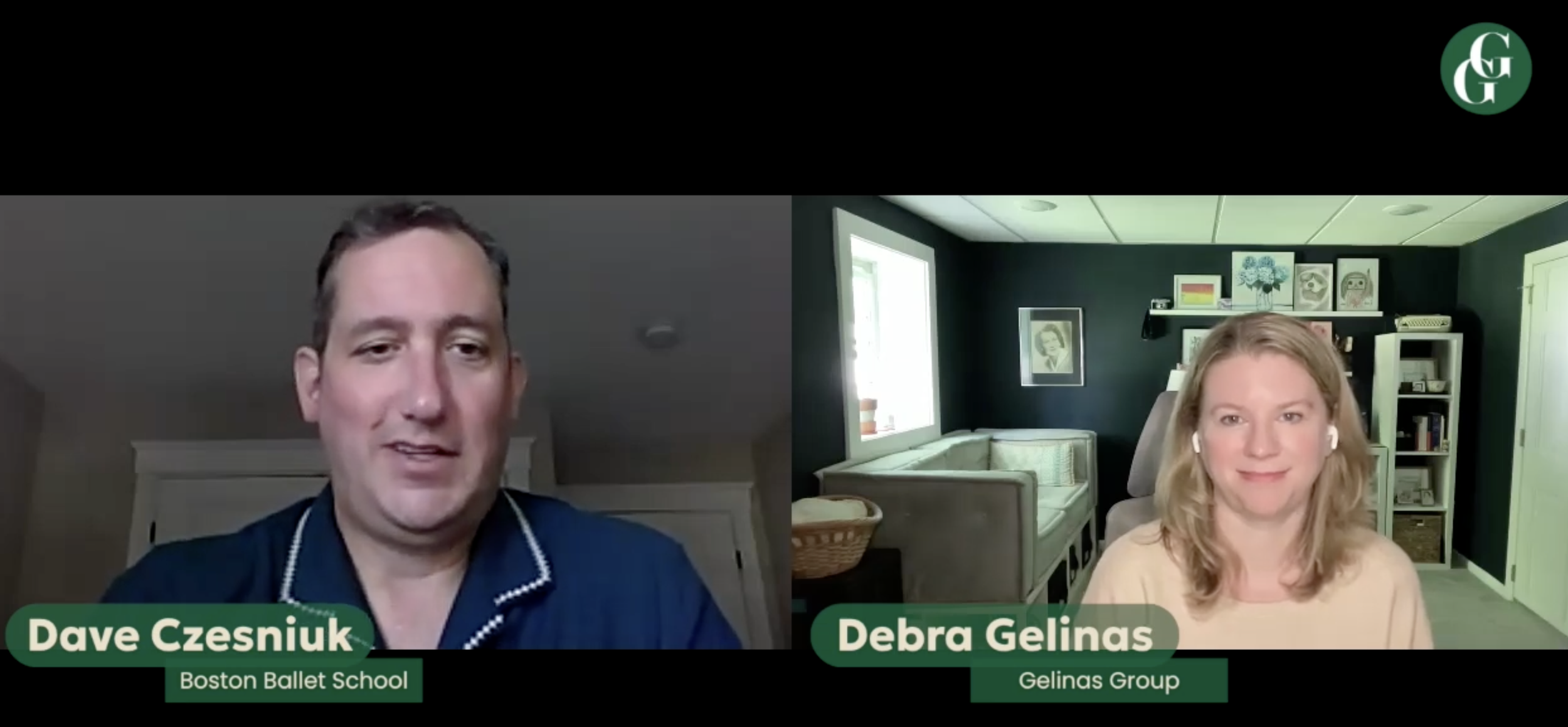
Dave Czesniuk and Debra Gelinas.
Some Key Insights From Our Conversation
Here we focus on AI and work. I’ve included a video of that part of our conversation below and encourage you to watch it to learn more about Dave’s upbeat take on what he’s observing in this space.
AI and jobs. A hot topic lately is whether there are fewer jobs, especially entry-level positions for new college graduates, because of AI. Dave believes that yes, some jobs will be eliminated, but new jobs will be created. We just can’t imagine what those jobs will look like yet and that partly explains our collective anxiety on the topic.
Humans made AI. One of my favorite insights from Dave. “AI was created by humans. It is currently being managed by humans. It’s being cultivated by humans. I think as a result there’s a certain, probably even evolutionary, motivation for us to make sure that it stays a tool in a toolbox and not an ever-present force, or an omnipotent force, in our work and in our lives.”
AI can’t think critically. Dave reinforces the notion that human skills matter. “AI is not available for multi-layered critical thinking and analysis about what a particular direction a business should take. It’s still up to the human performers, managers, and directors and everybody to pull it all into a strategy that makes sense for the realities of each business.”
Those who are curious are taking the lead. Because AI is a new technology, some people are more comfortable than others with adopting AI tools. Dave suggests that curiosity matters here. In the workplace, people can learn from each other. Those who are most interested and curious are often being pulled into conversations about AI policy at organizations. They are the ones that are teaching others around them how to use the tools. Dave says, “I was the latest adopter on my 14 person staff, the staff that directly reports to me. I'm the oldest. I wasn't outright anti-AI. I just kind of brushed it off as like, you know, turbo Google. And I don't use Google all that much either. And I kind of like researching, experimenting, but recognizing that I was in the minority, one day decided it was time for me to dabble just because these people that I respect, these people that I lead, these people that are contributing so mightily to our work, were finding it useful. Sometimes that should be the reason to try it. When you see people that are strong examples of high performers in your workplace and they're trying something new, shouldn't we at least give it a look?”
And Some Very Human Advice. I asked Dave about what to do if there are some people who embrace the technology at an organization and others who don’t. His response struck me as being so incredibly important to all our interactions with other humans, that I had to wrap up with his advice. “If we as managers can leave space in as many conversations as possible, like 10 more seconds for every point so people can articulate their intention, the why behind their stance, then that will naturally bring people closer together because both sides will have a reason that will create understanding in the other and at the very least they'll inch a little bit closer to the middle.” If we all took the time to do this at work and in life, imagine what humans might be able to achieve.
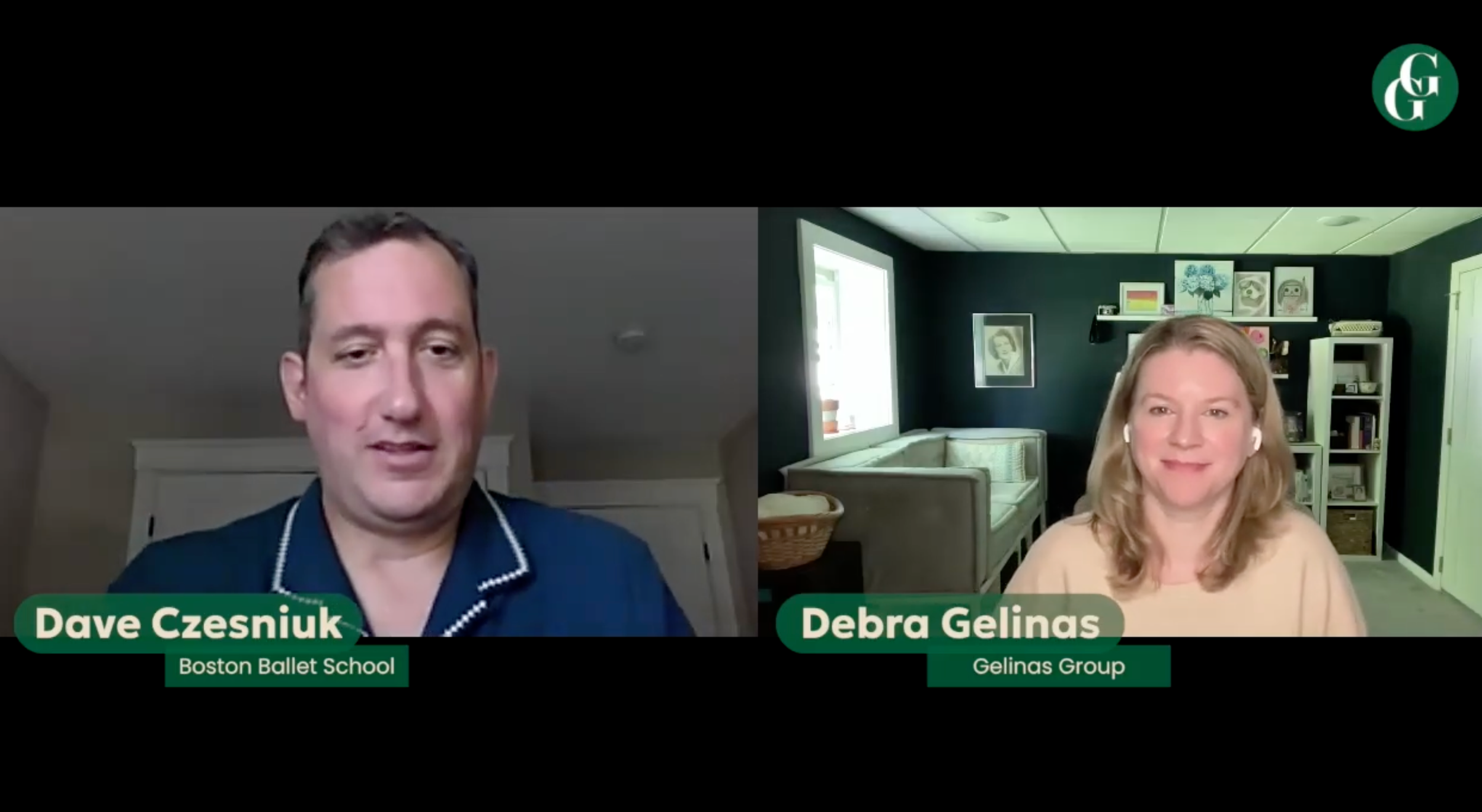
“AI was created by humans. It is currently being managed by humans. It’s being cultivated by humans.”
To learn more, please visit:
And connect with us on LinkedIn: